Buy croisière.be ?
We are moving the project
croisière.be .
Are you interested in purchasing the domain
croisière.be ?
domain@kv-gmbh.de · 0541-91531010
Buy croisière.be ?
What is the difference between paper chromatography and gas chromatography?
Paper chromatography involves the separation of compounds based on their affinity to the stationary phase (paper), while gas chromatography separates compounds based on their volatility and interaction with the mobile phase (gas). In paper chromatography, the mobile phase is a liquid solvent, whereas in gas chromatography, the mobile phase is a gas. Gas chromatography is typically more sensitive and provides better resolution compared to paper chromatography, making it more suitable for analyzing complex mixtures of compounds. **
What happens during chromatography?
During chromatography, a mixture of substances is separated into its individual components based on their different affinities for a stationary phase and a mobile phase. The sample is applied to the stationary phase, and the mobile phase is passed through the stationary phase. As the mobile phase moves through the stationary phase, the components of the mixture will interact differently with the stationary phase, causing them to separate and move at different rates. This results in the components being eluted from the column at different times, allowing for their individual identification and quantification. **

Similar search terms for Chromatography
Top-Angebote
Products related to Chromatography:
-
Sigma Beauty Travel Kit kit voyageSigma Beauty Travel Kit, 7 pcs, Sets de pinceaux pour femme, Les maquilleurs professionnels n’utilisent que des pinceaux de qualité. Inspirez-vous donc de leur expertise et remplacez vos doigts par des pinceaux. Le kit de pinceaux de maquillage Sigma Beauty Travel Kit élèvera votre mise en beauté à un niveau supérieur et vous permettra de réaliser votre make-up de jour ou de soirée aussi bien qu’un professionnel. Avec ce kit, aucun look ne sera hors de votre portée, que vous vous maquilliez à la maison ou n’importe où ailleurs. L'ensemble contient: Face F30 Large Powder Brush grand pinceau poudre compacte ou libre 1 pcs Eyes E55 Eye Shading Brush pinceau estompeur et transitions 1 pcs Eyes E30 Pencil Brush pinceau eyeliner 1 pcs Face E40 Tapered Blending Brush pinceau estompeur 1 pcs Eyes E65 Small Angle Brush pinceau multifonctionnel 1 pcs Face F60 Foundation Brush pinceau fond de teint liquide 1 pcs boîte de rangement pour pinceaux 1 pcs Le produit : pour l’application de produit en crème pour l’application de produit en poudre forme spéciale pour une application facile idéal pour la valise ou pour votre sac à main95,04 €*Shipping: 3,45 €Secure redirect to the provider



-
Is there a difference between chromatography and thin layer chromatography of amino acids?
Yes, there is a difference between chromatography and thin layer chromatography (TLC) of amino acids. Chromatography is a general term for a technique used to separate and analyze mixtures, while TLC is a specific type of chromatography that uses a thin layer of adsorbent material on a flat support to separate compounds. In the case of amino acids, both techniques can be used to separate and analyze the different amino acids present in a mixture, but TLC is a quicker and simpler method that is often used for preliminary analysis or for educational purposes. Traditional chromatography methods, such as high-performance liquid chromatography (HPLC), may offer higher resolution and sensitivity for more detailed analysis of amino acids. **
-
What is paper chromatography in chemistry?
Paper chromatography is a technique used in chemistry to separate and analyze mixtures of substances. It involves placing a small spot of the mixture on a strip of paper and then allowing a solvent to move up the paper through capillary action. As the solvent moves, it carries the different components of the mixture at different rates, causing them to separate based on their affinity for the paper and the solvent. This technique is commonly used in the identification of unknown substances and in the analysis of complex mixtures. **
-
What is the principle of chromatography and can you provide an example of different chromatography methods?
Chromatography is a technique used to separate and analyze complex mixtures based on the differential interactions between the components of the mixture and a stationary phase. The principle of chromatography involves the sample being dissolved in a mobile phase and passed through a stationary phase. The components of the sample interact differently with the stationary phase, causing them to separate based on their affinity for the stationary phase. There are various types of chromatography methods, including gas chromatography (GC), liquid chromatography (LC), and high-performance liquid chromatography (HPLC). In gas chromatography, the mobile phase is a gas, while in liquid chromatography, the mobile phase is a liquid. HPLC is a more advanced form of liquid chromatography that uses high pressure to separate components more efficiently. **
-
What is the principle of chromatography and can you give an example of different chromatography methods?
Chromatography is a technique used to separate and analyze complex mixtures based on the differential interactions between the components of the mixture and a stationary phase. The principle of chromatography involves the sample being dissolved in a mobile phase and passed through a stationary phase, where the components of the sample interact differently with the stationary phase, causing them to separate. There are several types of chromatography methods, including gas chromatography (GC), liquid chromatography (LC), and high-performance liquid chromatography (HPLC). In gas chromatography, the mobile phase is a gas, while in liquid chromatography, the mobile phase is a liquid. High-performance liquid chromatography is a more advanced form of liquid chromatography that uses high pressure to separate components more efficiently. **


How can one explain chromatography in kindergarten?
Chromatography can be explained in kindergarten by using simple language and visuals. One way to explain it is by comparing it to how colors separate when they mix in water. Children can be shown how different colors in markers or food coloring separate and spread out on a paper strip when placed in water. This can help them understand that chromatography is a process that separates different colors or substances based on how fast they move through a material. Overall, using hands-on activities and simple explanations can make chromatography understandable and engaging for kindergarteners. **
What is chromatography and how does it work?
Chromatography is a technique used to separate and analyze mixtures of substances based on their different properties. It works by passing a mixture through a stationary phase, which can be a solid or liquid, and a mobile phase, which carries the mixture through the stationary phase. The components of the mixture interact differently with the stationary phase, causing them to move at different rates and separate from each other. This allows for the identification and quantification of the individual components in the mixture. **
Top-Angebote
Products related to Chromatography:
-
NIVEA Travel Set kit voyageNIVEA Travel Set, , Antitranspirants pour femme, Retrouvez tous les soins nécessaires à l’obtention d’une belle peau dans un seul et unique kit. Le coffret cosmétique NIVEA Travel Set est idéal pour vous faire plaisir ou faire plaisir à vos proches. L'ensemble contient: NIVEA Micellar Soothing eau micellaire nettoyante peaux sensibles 100 ml NIVEA Invisible Black & White Clear anti-transpirant en spray 100 ml NIVEA Creme Soft gel douche traitant 50 ml NIVEA Volume Care laque cheveux 75 ml Le produit : assortiment de produits cosmétiques pour un usage quotidien contient les versions miniature des produits idéal pour les déplacements un ensemble de soins complet pour votre routine quotidienne fera plaisir à toutes les femmes Mode d’emploi : Utilisez chaque produit contenu dans le coffret cosmétique en respectant les instructions fournies dans le mode d’emploi.12,33 €*Shipping: 3,45 €Secure redirect to the provider
-
Sigma Beauty Travel Kit kit voyageSigma Beauty Travel Kit, 7 pcs, Sets de pinceaux pour femme, Les maquilleurs professionnels n’utilisent que des pinceaux de qualité. Inspirez-vous donc de leur expertise et remplacez vos doigts par des pinceaux. Le kit de pinceaux de maquillage Sigma Beauty Travel Kit élèvera votre mise en beauté à un niveau supérieur et vous permettra de réaliser votre make-up de jour ou de soirée aussi bien qu’un professionnel. Avec ce kit, aucun look ne sera hors de votre portée, que vous vous maquilliez à la maison ou n’importe où ailleurs. L'ensemble contient: Face F30 Large Powder Brush grand pinceau poudre compacte ou libre 1 pcs Eyes E55 Eye Shading Brush pinceau estompeur et transitions 1 pcs Eyes E30 Pencil Brush pinceau eyeliner 1 pcs Face E40 Tapered Blending Brush pinceau estompeur 1 pcs Eyes E65 Small Angle Brush pinceau multifonctionnel 1 pcs Face F60 Foundation Brush pinceau fond de teint liquide 1 pcs boîte de rangement pour pinceaux 1 pcs Le produit : pour l’application de produit en crème pour l’application de produit en poudre forme spéciale pour une application facile idéal pour la valise ou pour votre sac à main95,04 €*Shipping: 3,45 €Secure redirect to the provider
-
What is the difference between paper chromatography and gas chromatography?
Paper chromatography involves the separation of compounds based on their affinity to the stationary phase (paper), while gas chromatography separates compounds based on their volatility and interaction with the mobile phase (gas). In paper chromatography, the mobile phase is a liquid solvent, whereas in gas chromatography, the mobile phase is a gas. Gas chromatography is typically more sensitive and provides better resolution compared to paper chromatography, making it more suitable for analyzing complex mixtures of compounds. **
-
What happens during chromatography?
During chromatography, a mixture of substances is separated into its individual components based on their different affinities for a stationary phase and a mobile phase. The sample is applied to the stationary phase, and the mobile phase is passed through the stationary phase. As the mobile phase moves through the stationary phase, the components of the mixture will interact differently with the stationary phase, causing them to separate and move at different rates. This results in the components being eluted from the column at different times, allowing for their individual identification and quantification. **
-
Is there a difference between chromatography and thin layer chromatography of amino acids?
Yes, there is a difference between chromatography and thin layer chromatography (TLC) of amino acids. Chromatography is a general term for a technique used to separate and analyze mixtures, while TLC is a specific type of chromatography that uses a thin layer of adsorbent material on a flat support to separate compounds. In the case of amino acids, both techniques can be used to separate and analyze the different amino acids present in a mixture, but TLC is a quicker and simpler method that is often used for preliminary analysis or for educational purposes. Traditional chromatography methods, such as high-performance liquid chromatography (HPLC), may offer higher resolution and sensitivity for more detailed analysis of amino acids. **
-
What is paper chromatography in chemistry?
Paper chromatography is a technique used in chemistry to separate and analyze mixtures of substances. It involves placing a small spot of the mixture on a strip of paper and then allowing a solvent to move up the paper through capillary action. As the solvent moves, it carries the different components of the mixture at different rates, causing them to separate based on their affinity for the paper and the solvent. This technique is commonly used in the identification of unknown substances and in the analysis of complex mixtures. **
Similar search terms for Chromatography
-
Vertus Luxury Travel set kit voyage mixteVertus Luxury Travel set, 10 ml, Coffret unisexe mixte, Rien ne plaira plus aux amatrices de parfum que la miniature de leur parfum préféré, qu'elles pourront emporter partout. Le coffret de parfum mixte Vertus Luxury Travel set plaira à coup sûr, pour vous ou à offrir. Le grand flacon restera sur la tablette de toilette, alors que la version miniature vous accompagnera dans tous vos déplacements. Le produit : mixte : tant pour les femmes que pour les hommes parfum original pour les personnalités uniques L'ensemble contient: Vertus Narcos'is Eau de Parfum 10 ml Travalo 10 ml Funnel83,50 €*Shipping: 3,45 €Secure redirect to the provider
-
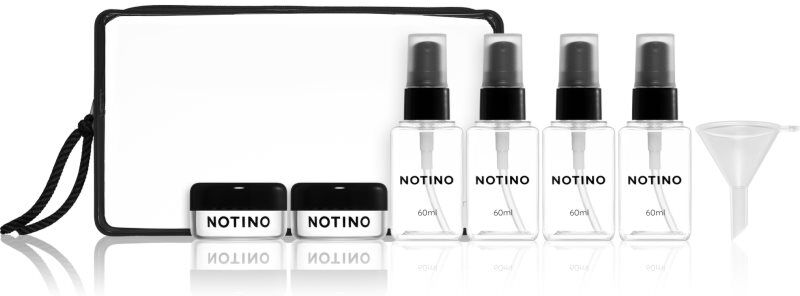
Accentra Travel Set kit de voyage réutilisableAccentra Travel Set, , Soin du corps pour femme, L'ensemble contient: Accentra bouteille doseuse avec pompe doseuse 50 ml Accentra bouteille doseuse avec vaporisateur 50 ml Accentra bouteille doseuse 50 ml Accentra pot 10 g Accentra spatule à crème 1 pcs Le produit : idéal pour les déplacements Composition du produit : fait partie de la trousse de toilette2,72 €*Shipping: 3,45 €Secure redirect to the provider
-
What is the principle of chromatography and can you provide an example of different chromatography methods?
Chromatography is a technique used to separate and analyze complex mixtures based on the differential interactions between the components of the mixture and a stationary phase. The principle of chromatography involves the sample being dissolved in a mobile phase and passed through a stationary phase. The components of the sample interact differently with the stationary phase, causing them to separate based on their affinity for the stationary phase. There are various types of chromatography methods, including gas chromatography (GC), liquid chromatography (LC), and high-performance liquid chromatography (HPLC). In gas chromatography, the mobile phase is a gas, while in liquid chromatography, the mobile phase is a liquid. HPLC is a more advanced form of liquid chromatography that uses high pressure to separate components more efficiently. **
-
What is the principle of chromatography and can you give an example of different chromatography methods?
Chromatography is a technique used to separate and analyze complex mixtures based on the differential interactions between the components of the mixture and a stationary phase. The principle of chromatography involves the sample being dissolved in a mobile phase and passed through a stationary phase, where the components of the sample interact differently with the stationary phase, causing them to separate. There are several types of chromatography methods, including gas chromatography (GC), liquid chromatography (LC), and high-performance liquid chromatography (HPLC). In gas chromatography, the mobile phase is a gas, while in liquid chromatography, the mobile phase is a liquid. High-performance liquid chromatography is a more advanced form of liquid chromatography that uses high pressure to separate components more efficiently. **
-
How can one explain chromatography in kindergarten?
Chromatography can be explained in kindergarten by using simple language and visuals. One way to explain it is by comparing it to how colors separate when they mix in water. Children can be shown how different colors in markers or food coloring separate and spread out on a paper strip when placed in water. This can help them understand that chromatography is a process that separates different colors or substances based on how fast they move through a material. Overall, using hands-on activities and simple explanations can make chromatography understandable and engaging for kindergarteners. **
-
What is chromatography and how does it work?
Chromatography is a technique used to separate and analyze mixtures of substances based on their different properties. It works by passing a mixture through a stationary phase, which can be a solid or liquid, and a mobile phase, which carries the mixture through the stationary phase. The components of the mixture interact differently with the stationary phase, causing them to move at different rates and separate from each other. This allows for the identification and quantification of the individual components in the mixture. **
* All prices are inclusive of VAT and, if applicable, plus shipping costs. The offer information is based on the details provided by the respective shop and is updated through automated processes. Real-time updates do not occur, so deviations can occur in individual cases. ** Note: Parts of this content were created by AI.